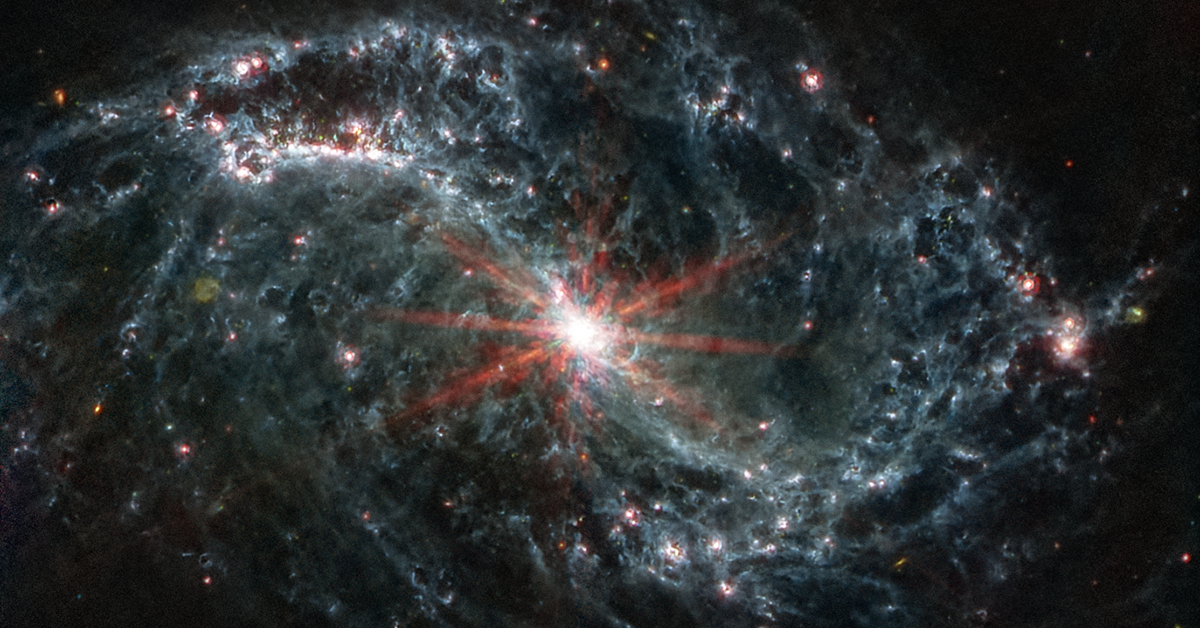
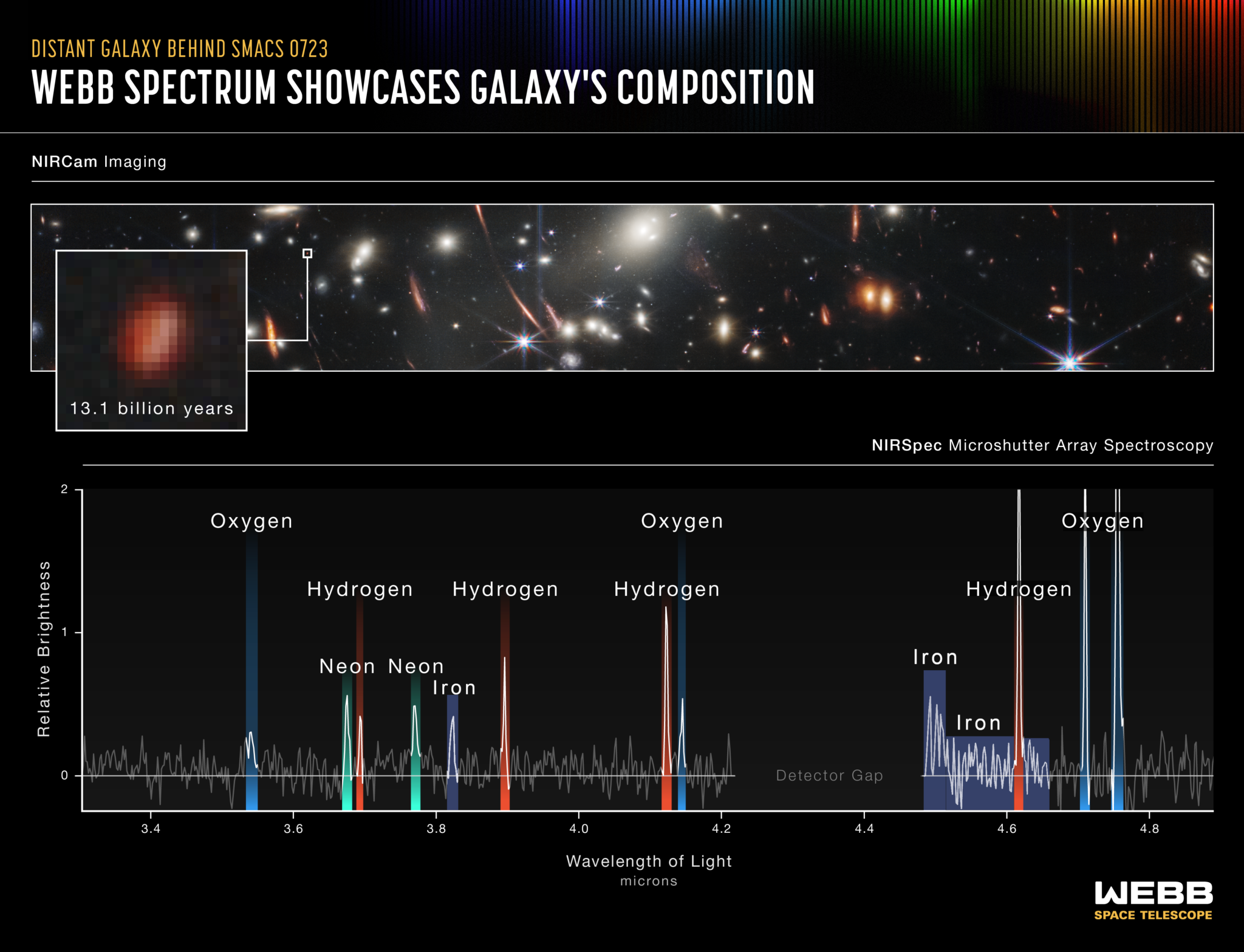
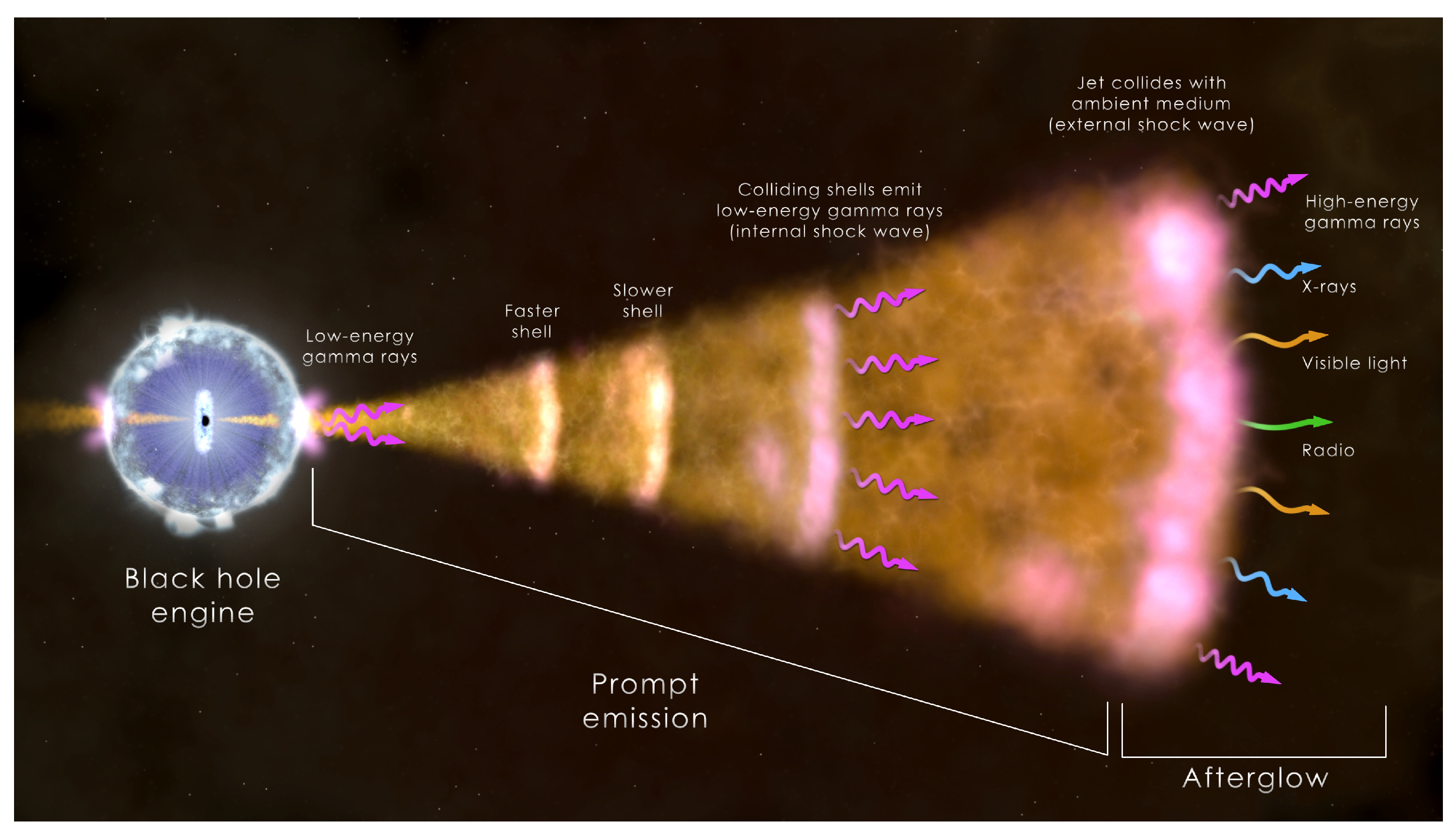
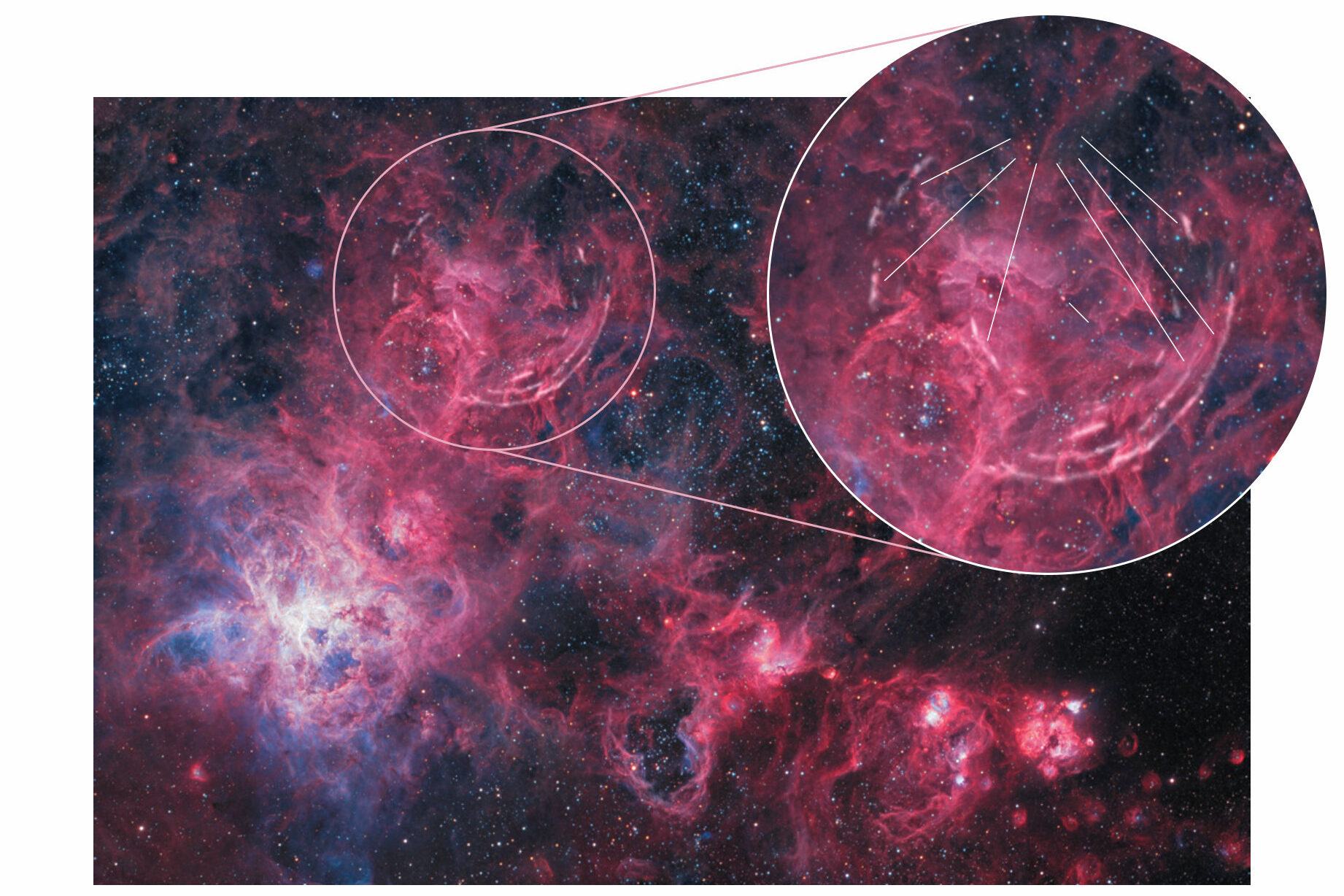
Image credits, from left to right after the logo: NASA, ESA, CSA, Joseph DePasquale/STScI; NASA/ESA/CSA/JD, Ph.D.; NASA’s Goddard Space Flight Center; Rolf Olsen.
Probing the Circumstellar and Interstellar Medium with Transients and Multi-Wavelength Observations
Monday 26 October 2026 - Thursday 29 October 2026
Workshop co-organized by
The France - Japan Network for Exoplanets, Extragalactic Astrophysics and Cosmology (NECO)
This workshop is supported by the Department of Pure and Applied Physics,Graduate School of Advanced Science and Engineering, the Faculty of Science and Engineering, Waseda University
The JSPS Core-to-Core Program “SUPER_IRNET 2.0”
Information on the Workshop
Title
Probing the Circumstellar and Interstellar Medium with Transients and Multi-Wavelength Observations
Dates
26th to 29th October 2026
Venue
Waseda University, Tokyo, Japan
Scientific Organizing Committee (SOC)
Denis Burgarella (co-chair, France)
Akio Inoue (co-chair, Japan)
Maria Dainotti (Japan)
Keiichi Maeda (Japan)
Nathalie Ysard (France)
Local Organizing Committee (LOC)
Yuma Sugahara (Banquet)
Ken Mawatari (Coffee break)
Keisuke Matsumoto (Registration desk and venue)
Akio Inoue (Chair)
Invited Reviews
Hiddo Algera (ASIAA, Taiwan): status of studies on the ISM of distant galaxies with from sub-mm & radio
Frédéric Galliano (Université Paris-Saclay, Université Paris Cité, CEA, CNRS, AIM): Physics of Dust in Galaxies
Yuichi Harikane (Cosmic Ray Research, the University of Tokyo): PFS Galaxy Survey and HiZ-GUNDUM GRB Satellite
Chiaki Kobayashi (University of Hertfordshire, UK): Dust evolution
Hideo Matsuhara (Institute of Space and Astronautical Science): Japanese future GRB mission: HiZ-GUNDAM
Mikako Matsuura (School of Physics and Astronomy at the Cardiff University): SNe remnants and ISM
Daniele Michilli (Laboratoire d'Astrophysique de Marseille): Fast Radio Bursts
Rieko Momose (NAOJ): IGM and CGM Traced by Lyα Emitters
Understanding the multi-scale structure of baryonic matter, from circumstellar environments to the intergalactic medium, is a central challenge in galaxy evolution.
The circumstellar, interstellar, and circumgalactic media (CSM, ISM, and CGM) are tightly interconnected across these scales, linking stellar processes to galaxy-wide gas reservoirs and beyond.
Transient phenomena such as supernovae (SNe), gamma-ray bursts (GRBs) and fast radio bursts (FRBs) and quasars provide powerful probes of gas and dust
along the line of sight. Early-time SNe observations trace the CSM, while GRB afterglows probe the ISM of their host galaxies.
FRBs and quasar spectroscopy extends these studies to ISM, CGM, and intergalactic medium (IGM) scales.
Quasars also allow to access compact regions via broad absorption line (BAL) features.
Complementary to these line-of-sight probes, multi-wavelength observations with facilities such as JWST, ALMA, NOEMA, PFS, and SKA
provide both global and spatially resolved views of gas, dust, and stellar populations.
These approaches offer a broader context in which to interpret the localized information obtained from transient-based measurements.
Despite these advances, a coherent and unified multi-scale framework linking CSM/ISM and CGM/IGM studies remains lacking.
Bridging this gap is essential for understanding dust evolution, feedback processes, and for assessing how representative transient sightlines are of global galaxy properties.
With present and next-generation facilities, the time is ripe to advance this synergy.
This workshop will bring together the transient and galaxy/ISM communities to develop a coherent, multi-scale view of baryonic structures across cosmic time.
Dedicated discussion sessions will be included to foster interaction and to stimulate future collaborations, particularly between Japanese and French teams.
Main Scientific Topics
Multi-wavelength observations with JWST, ALMA, NOEMA, PFS, and related facilities
Circumstellar media probed by early supernova observations
Interstellar media in GRB host galaxies
Decomposition of ISM, CGM, and IGM in dispersion measures of FRBs
Quasar spectroscopy of the ISM, CGM, and IGM
Broad absorption line (BAL) regions and compact environments
Dust evolution and feedback processes
Building a unified multi-scale framework from CSM to CGM/IGM
Audience
Researchers in astrophysics working on transients, galaxy evolution, ISM/CGM studies, spectroscopy, and multi-wavelength observations,
including early-career and senior scientists.
A banquet will be organized during the conference. The final price per person is still to be confirmed but should be around 10,000 JPY (about 55 euros). More information will be provided after registration.
Monday, 26 October 2026
Time
Speaker / Activity
Title
09:00–09:30
Registration
Session 1 GRB progenitors, jets, missions & multi-messenger transients
09:30–10:00
Hideo Matsuhara Invited review
Concept of HiZ-GUNDAM: High-Z Gamma-ray bursts UNraveling the Dark Ages and extreme space-time Mission
10:00–10:20
Hamid Hamidani
The diversity of Einstein Probe gamma-ray bursts and associated transients
10:20–10:40
Lucy McNeill
Angular momentum mixing in gamma-ray burst progenitor stars before core-collapse
10:40–11:00
Akira Mizuta
Jet–cocoon mixing and breakout structure of collapsar gamma-ray burst jets
11:00–11:30
Coffee break
Session 2 GRB hosts, afterglows & cosmic history
11:30–12:00
Benjamin Schneider Invited review
GRB host galaxies
12:00–12:20
Véronique Buat
Extinction and attenuation curves in galaxies hosting GRBs
12:20–13:50
Lunch
13:50–14:10
Aleksander Lenart
GRB host galaxies in the era of legacy surveys and machine learning
14:10–14:30
Antonio de Ugarte Postigo
The variety of environments probed by GRB afterglows
14:30–14:50
Maria Giovanna Dainotti
The GRB rate density vs Star Formation rate: the challenge of this link
Session 3 Supernovae & Milky Way
14:50–15:20
Mikako Matsuura Invited review
Supernovae and supernova remnants and their impact on the ISM
15:20–15:40
Keiichi Maeda
Diversity in Circumstellar Environments Around Supernovae: Challenging Stellar Evolution Theory
15:40–16:10
Coffee break
16:10–16:30
Sojun Ono
Galactic Chemical Evolution as a Diagnostic of the Metallicity-dependent Explodability of Massive Stars
16:30–16:50
Anjali Gupta
Tracing Nitrogen Enrichment in the Milky Way Galactic Halo
16:50–17:10
Yu Ogane
High-dimensional Statistical Analysis of Molecular Gas in the Central Region of NGC 253
17:10–17:30
Yaoting Yan
Ammonia masers in the Milky Way
17:30–18:00
Discussion
18:00
End of day
Tuesday, 27 October 2026
Time
Speaker / Activity
Title
Session 3 Supernovae & Milky Way
09:30–10:00
Shigehiro Nagataki Invited review
Supernova–Supernova Remnant Connection
10:00–10:20
Aikaterini Niovi Triantafyllaki
Decoding Superbubble Feedback: Gas Thickness, Energy Losses, and Phase-Space Signatures
Session 4 Dust physics & the high-redshift dusty ISM
10:20–10:40
Daisuke Toyouchi
Grain-size evolution and dust growth in high-redshift galaxies
10:40–11:00
Chloé Aurin
Low-redshift GELDAs in CEERS: testing the physical origin of extremely low UV attenuation
11:00–11:30
Coffee break
11:30–12:00
Frédéric Galliano Invited review
A Review of our current understanding of interstellar dust evolution
12:00–12:20
Jie Song
SDSS+JWST Census of Stellar and Nebular Dust Attenuation at z ~ 0 - 7: Mass Dependence and Redshift Evolution
12:20–13:50
Lunch
13:50–14:10
Tim Dewachter
A Statistical Analysis of Dust Attenuation Laws in Early Universe Galaxies Through CAPERS
14:10–14:30
Xingyao Cai
Empirical dust attenuation curves at z=3-7 from JWST/NIRSpec
14:30–14:50
Ryusei Kano
How to Solve the z ~ 8 Dust Budget Crisis: The Role of Dense Molecular Clumps in MACS0416_Y1
14:50–15:10
Kana Takechi
JWST Spectroscopy of MACS0416-Y1 at z = 8.3: Early Dust Growth, High Dust Temperature, and Multiwavelength Emission-line Diagnostics
15:10–15:40
Coffee break
15:40–16:10
Hiddo Algera Invited review
A (sub-)millimeter view on the high-redshift ISM
16:10–16:30
Mana Ito
Theoretical Predictions for Dust Temperature and Infrared Luminosity Functions of Massive Galaxies during the Epoch of Reionization
16:30–16:50
Taiga Nozawa
Exploring high-z dust-obscured galaxies through an ALMA blind survey and revealing their properties with multi-wavelength observations
16:50–17:10
Natsuki H. Hayatsu
An HST-Dark ULIRG at z = 3.386 toward the Cloverleaf QSO: A Serendipitous Discovery from ALMA Archival Data
17:10–17:30
Tomokazu Kiyota
JWST Spectroscopic Census of ALMA Faint Submillimeter Galaxies in the Hubble Ultra Deep Field
Studying astrophysical plasmas with thousands of fast radio bursts
10:00–10:20
Khee-Gan Lee
Probing the IGM and CGM with Localized Fast Radio Bursts & Foreground Spectroscopy
10:20–10:40
Matthew Pieri
A Third of a Million CGM Regions Probed at Cosmic Noon
10:40–11:00
Tatsuya Kotani
Precise Measurements of the Cosmic Microwave Background Temperature at z = 0.68 and z = 0.89 Using Molecular Absorption Lines
11:00–11:30
Coffee break
11:30–11:50
Akio Inoue
The first direct imaging of the silhouette of a damped Lyman α system along the line-of-sight to a background galaxy
11:50–12:10
Sora Inai
A Search for Diffuse Interstellar Bands in Distant DLA and MgII Absorption Systems
12:10–12:30
Shuairu Zhu
LCEz4-M1: the Most Distant Lyman Continuum Leaker to Date
12:30–14:00
Lunch
14:00–14:30
Rieko Momose Invited review
Bridging the Multiscale Baryon Cycle: From Transient Probes to the Cosmic Web
14:30–14:50
Mariko Kubo
PFS Emission line Galaxy Survey with Subaru
14:50–15:20
Coffee break
Session 6 Galaxy evolution, chemical evolution & AGNs
15:20–15:50
Chiaki Kobayashi Invited review
Cosmic Evolution of Elements and Dust
15:50–16:10
Chih-Teng Ling
Massive galaxy candidates in the high-redshift Universe probed with JWST imaging and spectroscopic data
16:10–16:30
Prajnadipt Ghosh
FAINT: Finding AGN In Nearly-invisible Targets
16:30–16:50
Hiroto Yanagisawa
A Scaling Relation of LRDs between Broad Hα and Bolometric Luminosities: Enhanced Broad Hα Emission Relative to Low-z Type 1 AGN
16:50–17:10
Ryo Kishikawa
Effects of AGNs on the surrounding ISM: evaluation of physical and chemical properties of luminous type 1 AGN NGC 7469 with ALMA Band 8 and 10 observation
17:10–17:40
Discussion
17:40
End of day
Thursday, 29 October 2026
Time
Speaker / Activity
Title
Session 7 Galaxy evolution, chemical evolution & ISM diagnostics
09:40–10:10
Yuichi Harikane Invited review
Chemical Evolution in the Early Universe: A Review of Recent Results and Future Prospects
10:10–10:40
Denis Burgarella
From stardust to interstellar grain growth in the first galaxies: a cosmological transition in dust evolution near z ≈ 8.9
10:40–11:00
Danial Langeroodi
Buildup of Metals from z~10 to the Local Universe
11:00–11:30
Coffee break
11:30–11:50
Suchetha Cooray
Optimal Inference of Galaxy Properties from SEDs in the era of Next Generation Surveys
11:50–12:10
Suzuka Arai
Spatially Resolved ISM Properties of “Big Three Dragons”, a major merger system at z=7.15
12:10–13:40
Lunch
13:40–14:00
Katarzyna (Kasia) Malek
Can we study ISM properties using galaxies that are barely visible?
14:00–14:20
Ken Mawatari
The Complex Nature of a z = 6.8 Galaxy Revealed by Spatially Resolved JWST and ALMA Spectroscopy
14:20–14:40
Asahi Hamada
RIOJA. Spatially Resolved Properties of the z ≈ 6 Galaxy RXC J2248-ID3
14:40–15:00
Seiya IMAI
Identifying Candidate Extreme [O III] Emitters at z = 2.0–2.6 through H-band Excess Selection in COSMOS
15:00–15:30
Coffee break
15:30–15:50
Yuma Sugahara
High-Redshift [NIII] 57 um: Ordinary N/O in Normal Star-Forming Regions at z=7.13
15:50–16:10
Minami Nakane
Early Chemical Enrichment in UV-Bright Galaxies at z=7.2-10.6 Probed by JWST Absorption-Line Analysis
16:10–16:40
Final discussion
16:45
End of programme
Practical Information
The workshop will take place at
Waseda University in Tokyo, Japan.
Travel and accommodation recommendations will be provided here in due course.
An attendance limit of about 26 participants is expected and we hope that all attendees will present a talk.
Important Dates
Opening of abstract submissions: May 22, 2026
Deadline for abstract submission: July 21 2026
Abstract acceptance announcement: August 10, 2026
Opening of registration: August 10, 2026
Deadline for registration: August 31, 2026
Workshop: October 26–29, 2026
Submit an Abstract
Officially closed, but send an abstract for special request.